contact@wix.com
+123-456-789
© 2035 by The Clinic.Powered and secured by Wix
TREATMENTS FOR EAR DISESES
(ENT SURGERY)

Hearing Loss
Hearing loss may be temporary or permanent and can occur due to aging, infections, noise exposure, wax buildup, or nerve damage. Symptoms include difficulty understanding speech, ringing sounds, or reduced sound clarity. Diagnosis involves audiometry and ear examination to identify the type and severity of hearing loss. Treatment varies based on cause and may include medications, hearing aids, surgical correction, or cochlear implantation. Early detection is essential, especially in children and elderly patients, to improve communication, quality of life, and overall well-being. Regular hearing evaluations help in timely management.

Earwax Buildup (Cerumen Impaction)
Earwax is a natural substance that protects the ear canal, but excessive buildup can cause blockage, pain, ringing in the ear, dizziness, or reduced hearing. Improper cleaning using cotton buds often pushes wax deeper into the canal. ENT specialists diagnose wax impaction through ear examination. Treatment includes safe removal using ear irrigation, suction, or special instruments under direct vision. The procedure is quick, painless, and performed on an outpatient basis. Patients are advised against self-cleaning and encouraged to seek professional care to avoid ear injury or infection.

Ear Infection (Otitis Media / Otitis Externa)
Ear infections occur when bacteria or viruses affect the ear canal or middle ear, leading to pain, discharge, hearing blockage, and sometimes fever. Children are more commonly affected, but adults may also develop infections due to water entry, allergies, or sinus problems. Diagnosis is done using an otoscope to examine the ear canal and eardrum. Treatment depends on severity and includes ear drops, oral medications, and pain management. In recurrent or severe cases, further evaluation is required to prevent complications such as hearing loss or eardrum damage. Early treatment ensures faster relief and protects hearing.
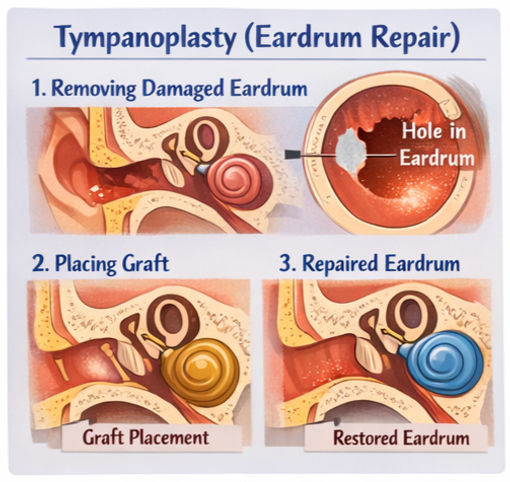
Eardrum Perforation & Tympanoplasty
A perforated eardrum is a hole or tear in the tympanic membrane, often caused by infection, trauma, or sudden pressure changes. It can lead to hearing loss, ear discharge, and recurrent infections. Tympanoplasty is a surgical procedure performed to repair the damaged eardrum using a tissue graft. The surgery restores the natural barrier of the ear, improves hearing, and prevents repeated infections. It is a safe and effective procedure with high success rates. Post-surgery care includes keeping the ear dry and attending follow-up visits for optimal healing.

Cochlear Implant for Severe Hearing Loss
A cochlear implant is an advanced medical device used in patients with severe to profound hearing loss who do not benefit from hearing aids. It works by directly stimulating the auditory nerve using implanted electrodes. The system consists of internal and external components, including a sound processor worn outside the ear. Cochlear implantation significantly improves sound perception, speech understanding, and communication ability. It is especially beneficial in children with congenital hearing loss and adults with progressive deafness. Post-implant auditory training and rehabilitation are essential for achieving optimal hearing outcomes.

Mastoiditis & Mastoidectomy
Mastoiditis is a serious infection of the mastoid bone behind the ear, usually resulting from long-standing middle ear infections. Symptoms include persistent ear discharge, pain, swelling behind the ear, and fever. If untreated, it can lead to serious complications. Mastoidectomy is a surgical procedure where infected bone and air cells are removed to control infection and protect nearby structures. The surgery helps eliminate disease, preserve hearing, and prevent spread to the brain. With timely intervention and proper care, patients recover well and experience significant symptom relief.
FOREIGN BODY REMOVAL FROM EAR

Foreign bodies in the ear are commonly seen in children and occasionally in adults. Objects such as beads, seeds, small toys, cotton pieces, or insects may become lodged in the ear canal, causing pain, hearing blockage, discharge, or irritation. Attempting self-removal at home can push the object deeper and increase the risk of injury to the ear canal or eardrum.
The procedure begins with a detailed examination using an otoscope to clearly visualize the foreign body and assess the condition of the ear canal and eardrum. Depending on the size, shape, and location of the object, the ENT specialist selects the safest removal technique.

Instruments such as fine forceps, suction tips, or ear hooks are used under direct vision to gently extract the foreign body without causing trauma.
In cases of live insects, appropriate measures are taken to immobilize them before removal.Foreign body removal is usually a quick, painless outpatient procedure.
After removal, the ear is re-examined to ensure complete clearance and to rule out any injury or infection. Early professional treatment ensures rapid relief, prevents complications, and protects hearing.